






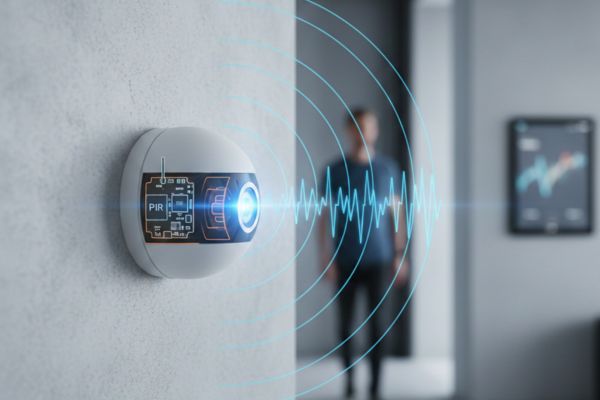
A motion sensor is an advanced technological device that monitors its surroundings to detect motion and block trespassers. Motion sensors use unique detection technologies, including dual technology and passive infrared. These devices rely on advanced sensing technologies to accurately detect movement while minimising false alarms.
Their work is to automate and enhance security devices such as CCTVs, making our daily lives safer and more convenient. Before you buy motion sensors, first learn how they work. Their working mechanism is relatively straightforward, as this detailed post reveals. Read on to discover different types of sensors and how they work.
5 Different Types of Motion Sensors
How do motion sensors work? To answer this question, you must consider each type of motion sensor, as it is unique. Below are four different kinds of motion sensors:
Passive Infrared Sensor
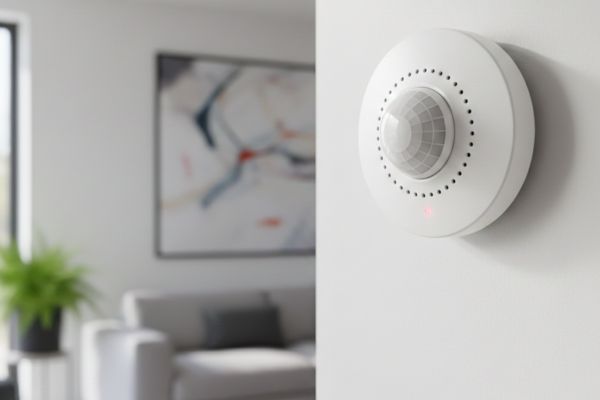
A PIR sensor is the most popular type on the market. It works by detecting any infrared radiation around it. They do not emit any radiation themselves. Instead, PIR sensors detect infrared radiation or heat from any object within their field of view. This can be a human body, an animal, or a car. PIR sensors consist of two symmetrically arranged pyroelectric sensors that sense the radiation levels. If something moves within its detecting range, it detects changes in the infrared radiation the object emits. Based on how the infrared radiation varies, it determines the type of trespasser. PIR sensors do not read the size, color, or shape of objects within their fields of view. To ensure your PIR produces no false alarms, ask a professional to position and adjust it accurately. PIR sensors have many applications in environments that detect infrared radiation from human bodies. Thus, their main uses are in the manufacturing of home automation systems, automatic doors, and lighting systems. PIR sensors are used to automate buildings and monitor space occupancy. Understanding how PIR sensors detect movement can also help clarify the differences between occupancy sensor vs motion sensor, as motion sensors respond to movement while occupancy sensors focus on detecting the presence of people within a space.
Ultrasonic Motion Sensor
How do motion sensors work if they are of the ultrasonic type? First, ultrasonic motion sensors are unique devices that detect motion based on emitted and received sound waves. These sensors assess the distance by measuring the time it takes for ultrasonic sound waves to bounce off the object and return to them. The actual formula for calculating the distance between an object and an ultrasonic sensor is: Speed of Sound x Time of Flight / 2. Using distance data, an ultrasonic motion sensor can trigger a response such as opening an automatic door when you approach it. Ultrasonic motion sensors are reliable at detecting even the slightest movements, although they can sometimes produce false alarms.
Microwave or Radar Motion Sensors
How do motion sensors work if they emit microwave energy? Microwave sensors have a unique and interesting working mechanism. They emit microwave signals and measure their reflections to sense motion. Microwave motion sensors produce electromagnetic waves with varying wavelengths, denoted by gigahertz (GHz). Once they emit these waves, they pass through the sensor’s field of view to interact with objects. When it encounters an object, such as a human body, some of the microwave energy returns to the sensor. The motion sensor has a receiver that captures the reflected energy and analyzes different things, including the Doppler Effect. After detecting and confirming motion, the microwave sensor provokes a response. This response can be anything, including switching on the alarm, security cameras, or turning on the lights.
Dual Technology Motion Sensor
Also known as dual-tech or dual motion, this sensor is one of the most advanced types. It can be a combination of Passive infrared and Microwave sensors, resulting in a device that can produce more accurate results. So how do motion sensors work with two detector types? A dual tech sensor will therefore detect motion by monitoring infrared radiation and electromagnetic waves. If both sensors activate, the dual tech motion sensors will trigger an action. In this manner, it reduces the chances of releasing false alarms from movements that do not matter, such as small animals or curtains.
Vibration Motion Sensors
How do motion sensors work when used in an industrial setting? Usually, a vibration sensor attaches to machinery to measure how frequently it vibrates and in which direction. A vibration sensor helps manufacturers detect mechanical issues, such as imbalance, when bearings fail. If the performance problem exceeds the acceptable levels, the vibration sensor will notify the control department or close the switch. Users can present these sensors to trigger maintenance alerts if vibrations become severe or to shut down the motor to prevent damage to the machinery. Vibration motion sensors have many industrial applications because they simplify predictive maintenance by detecting abnormal machine movements and vibrations.
As you may have noted so far, each sensor has unique working mechanisms and applications.
Devices to Integrate with Motion Sensors
What is a motion sensor, and in which devices can you find it? Usually, motion sensor technology is ideal for security devices and other appliances that require automation to save energy. Here are devices that pair with motion sensors:
HVAC
A HVAC system becomes more efficient when it conserves energy. You can include motion sensors in your building automation strategy to help detect unoccupied spaces and adjust resources accordingly. They can adjust lighting or heating when tenants are out, thereby conserving energy.
Security Cameras
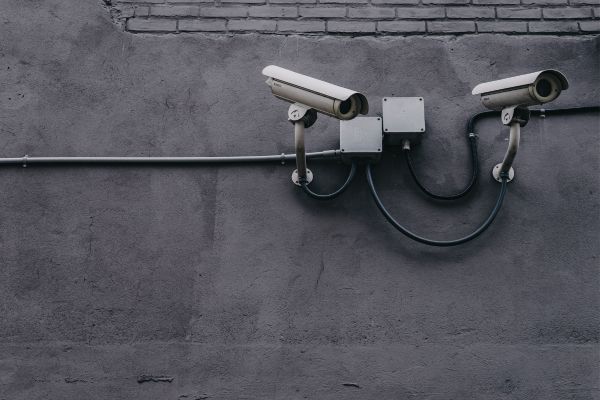
The basic role of motion sensors is to detect motion within their fields of view.If they detect anything, they will respond by switching on the security cameras or lights. By integrating your surveillance devices with motion sensors, you can enhance their accuracy levels, as they sense unusual activities. Motion sensors do not have cameras, but many modern security cameras come with built-in motion sensors for enhanced monitoring.
Alarms
The alarm systems at home or the workplace play a fundamental role in detecting dangers.If you pair it with motion sensors, they will trigger the alarm whenever they detect unusual movements.An alarm system paired with motion sensors works automatically, ensuring you wake up to check your surroundings only when necessary.
Doorbells
As a property owner who depends on doorbells to know when someone is at the door, you can benefit more from a motion sensor. How do motion sensors work with doorbells? If you pair your doorbell with a motion sensor, it will trigger an alert when a person approaches your door. These alerts will enhance your security because you won’t have to wait for a knock to know someone is at the door.
Home Automation System
Motion sensors can make your home automation system more reliable and efficient. If you integrate these sensors, you can adjust the settings of different appliances, including your lights, media systems, and security cameras.
Smart Lights
How do motion sensors work when integrated with smart lights? The mentor sensor will turn on the lights immediately after sensing unusual movements. If you want to conserve energy, this is the best approach because the motion sensor will switch on the lights when you enter a room and turn them off as you leave.
Industrial Plant
In a manufacturing plant, motion sensors have many different applications. For instance,vibration sensors measure the magnitude and direction of machine noises. If vibrations become severe, the sensor can react based on preset conditions. For example, it can alert the security team by relaying information or shut down the machine to reduce wear and tear or injuries.
Garage Door
Your garage is a target for thieves because of the car and other valuable things you store there. By automating its door, you will enhance the garage security and simplify your work when arriving or leaving. Since the automatic door will open and close automatically, you will not have to worry about forgetting and leaving it open.
Final Say
How do motion sensors work? Traditional motion sensors detect movements of humans, cars, or other objects within their field of vision using infrared radiation, microwave energy, or ultrasonic waves. You should install some of these motion sensors in areas with ample open spaces to cover a wider field of view and trigger outdoor security lighting or an alarm.
Attach them to a room corner to capture the whole area with fewer obstructions. Add these motion sensors to entryways and stores to conserve energy by automatically turning off lighting when no one is approaching. If you’ve learned something from this article, share your comments and views below.